
Why reporting should trace to assets
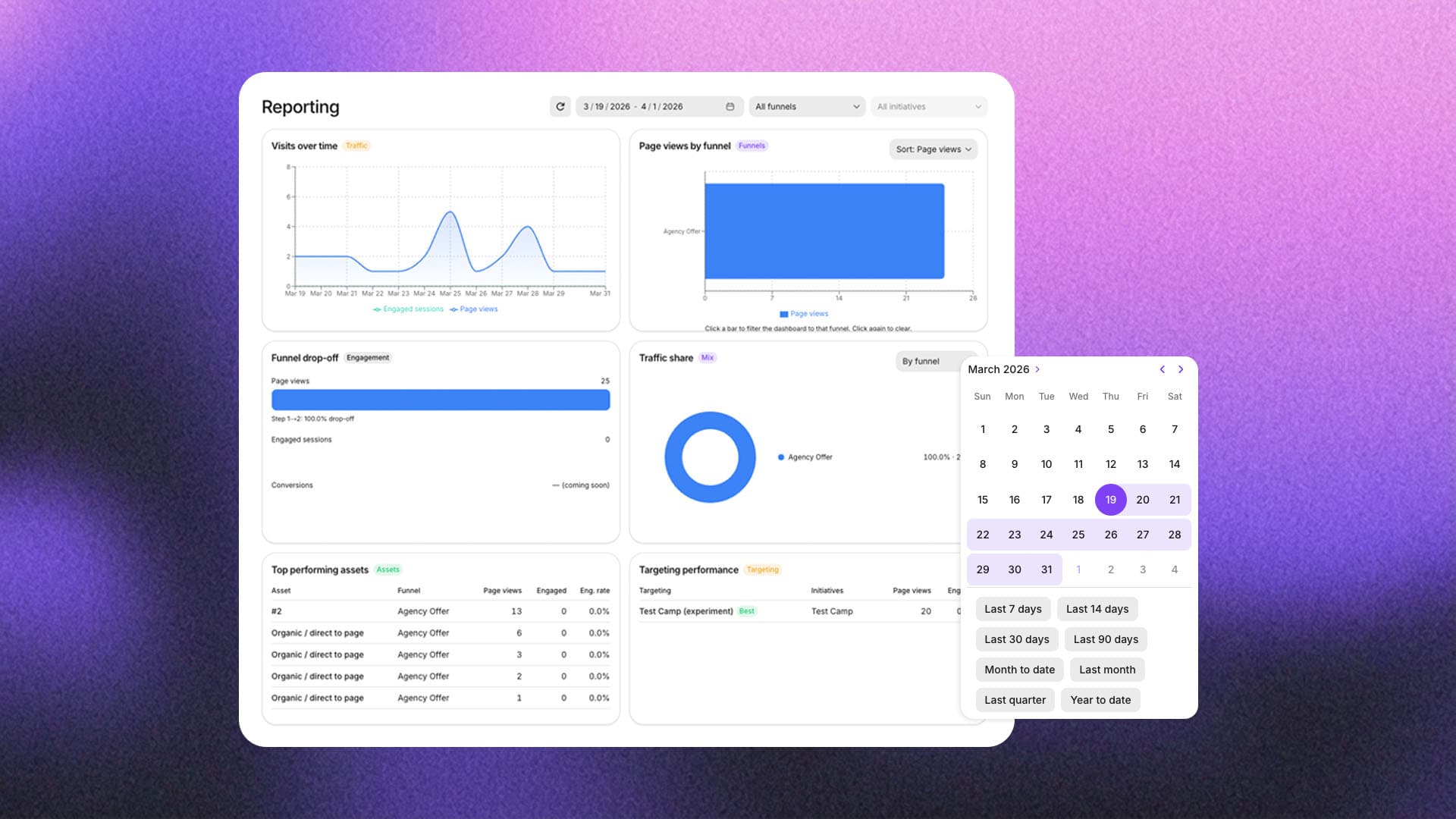
Dashboards that only show channel totals hide the real question: which story and experience drove the outcome? Fig’s reporting connects events to the pages, variants, and campaigns behind them so reviews turn into decisions—not reconciliation.
What you see in one place
| View | Purpose |
|---|---|
| Funnel steps | Where drop-off happens after a given entry |
| Attribution context | Tie outcomes to UTMs and experiments |
| Content & variant performance | Compare arms with shared definitions |
| Operational health | Spot broken links, forms, or tracking gaps |
Built for marketing reviews
Instead of exporting three tools into a sheet, stakeholders can anchor on the same objects they approved: offers, personas, pages, and active tests.
When this is the right next step
If weekly metrics reviews still start with “let me pull the numbers,” but nobody can explain what users saw on the path to convert, reporting tied to shipped work shortens the loop from insight to next experiment.